Universal Credit Migration: 7 Practical Steps for Social Landlords to Get It Right
Universal Credit (UC) migration is now entering its final phase, with the last tranche of working-age households moving across between now and the end of March 2026.
This is a pivotal period for social landlords. Around 2 in 5 households are missing the 12-week migration deadline, increasing the risk of income disruption and rent arrears. At the same time, the Universal Credit Standard Allowance is set to rise by approximately 6.2%, while wider welfare changes are reshaping the landscape.
Cuts to disability benefits for new claimants, the reintroduction of the two-child limit at £303.94 per child for those born after 6 April 2017, newly capped households, and the removal of Discretionary Housing Payments and the Government Household Support Fund all add further pressure.
Looking ahead to April 2026, benefits are forecast to increase by 3.8% while rents are due to rise by 4.8%. With other household bills also increasing, even traditionally reliable payers may begin to feel the squeeze.
Taken together, 2026 will demand a proactive, data-led and tenant-focused approach. The following seven steps outline a practical framework to help social landlords manage risk and support tenants effectively during this final stage of migration.

Step 1: Act Early and Map the Journey
As soon as a verification request appears on your organisation’s DWP portal, make contact with the tenant. Early engagement is critical.
Review current processes carefully.
- Are there points where tenants unintentionally fall through gaps?
- Is verification followed by meaningful contact and support?
- Does simply logging activity on your housing management system guarantee follow-up?
Consider the experience from the tenant’s perspective. Moving onto Universal Credit can feel daunting and uncertain. Mapping the full journey, from verification to first payment, allows income teams to design a seamless, supportive process.
Once weaknesses are identified, a structured framework can be implemented that reduces confusion and mitigates arrears risk from the outset.
Step 2: Master the Fundamentals
Sometimes the most impactful support lies in the basics.
Ensuring tenants understand how their Universal Credit journal operates is essential. The journal contains payment schedules, payment history, and actions requested by their DWP Work Coach. If tenants do not understand how to use it, they may miss key tasks or deadlines.
It is also important to understand household composition. Increasingly, non-dependants are living at home and in some cases, are earning more than the primary tenant. Yet some tenants feel uncomfortable asking adult children to contribute toward rent.
The key point: Universal Credit rules around non-dependants are generally more favourable than legacy Housing Benefit. Households that may have received no entitlement under Housing Benefit could qualify for full entitlement under UC. Ensuring staff understand these distinctions can make a significant difference.

Step 3: Understand Assessment Periods and Payment Dates
Knowing a tenant’s claim date gives immediate visibility of their assessment period and payment timeline.
For example:
- A claim submitted on 1 April runs from 1 April to 30 April, with payment typically issued seven days later.
- A claim submitted on 11 April runs from 11 April to 10 May, with payment made seven days after the period ends.
Having this information enables income teams to:
- Arrange Direct Debits aligned with payment dates
- Encourage tenants to set up Standing Orders
- Schedule reminder calls shortly before payment is received
Proactive alignment with payment cycles significantly reduces missed payments and early arrears.
Step 4: Strengthen Partnership Working
Universal Credit migration is not solely an income management issue; it requires cross-team collaboration and strong external relationships.
Internally, ensure all relevant teams understand the basics of UC and their role in tenant support. Regular knowledge checks can help keep benefit awareness up to date.
Externally, relationships with local DWP offices and support networks are vital. Increasingly, social landlords are co-locating staff within Job Centres to improve communication and escalation routes.
Ask:
- Are there clear escalation pathways with local DWP contacts?
- Can cases be referred quickly for review?
- Is your Financial Inclusion directory current and accurate?
Some local support services may no longer operate — ensuring referral pathways are up to date prevents delays for tenants seeking help.

Step 5: Keep the Tenant at the Centre
Tenants who have recently migrated to UC can offer invaluable insight.
By asking structured questions about their experience — what worked well, where they struggled, what additional support would have helped — landlords can refine their processes.
Organisations can sometimes assume their systems are effective without testing that assumption. Embedding tenant feedback into service design ensures your approach remains grounded in lived experience.
Step 6: Elevate Communications
Communications teams play an increasingly strategic role in income protection.
Rather than relying solely on quarterly newsletters, many organisations are adopting more agile approaches, including:
- QR codes on letters linking to targeted guidance
- Short, accessible explainer videos
- Social media campaigns
- Advertising support in communal areas
- Partnering with contractors to share key messages
- SMS messaging campaigns
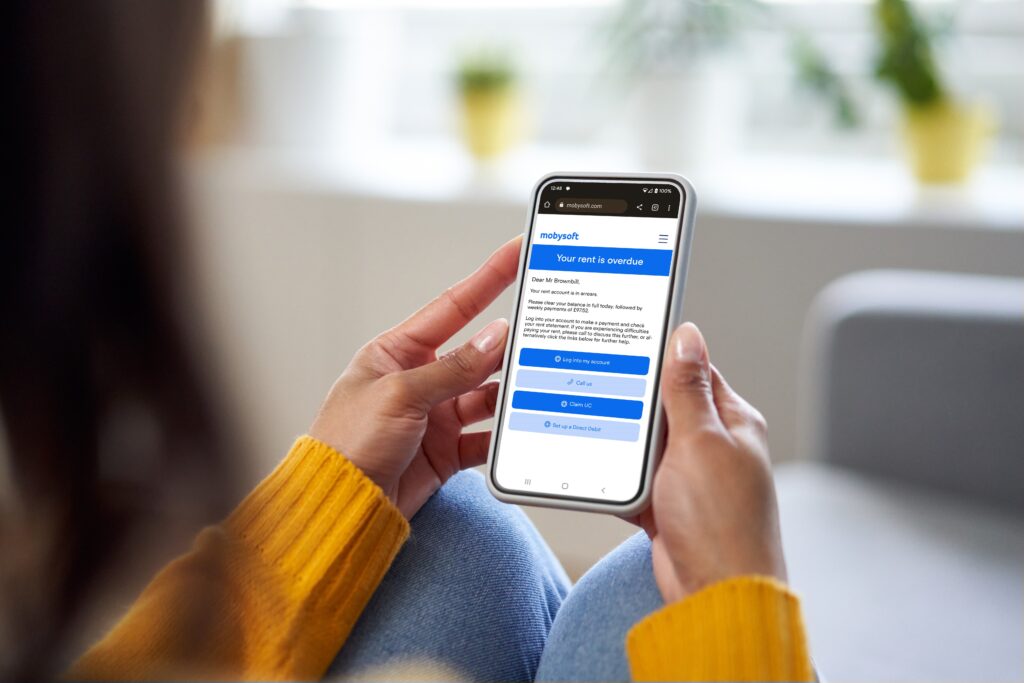
These channels allow landlords to personalise outreach and deliver the right message to the right tenant at the right moment. Crucially, they also generate useful engagement data that can be used to refine future campaigns.
Step 7: Make Data Work for You
Effective data management underpins everything.
Accurately capturing information on vulnerabilities, language needs, literacy levels and preferred contact methods enables genuinely personalised support. For tenants whose first language is not English, or who may struggle with written communication, adapting the approach is essential.
Recording claim dates and corresponding payment schedules allows organisations to automate timely, supportive contact.
A possible engagement approach could be:
- Three supportive text messages within the first five weeks of a UC claim
- A reminder three days before payment is due
- A friendly confirmation message on the day payment was received
Importantly, automation should complement, not replace, personal contact. Income officers can still telephone tenants to offer support. Combining thoughtful human interaction with well-timed digital messaging proves highly effective.
If you would like to explore how our income optimisation solutions can help your organisation navigate the final phase of UC migration with confidence, get in touch with our team today.

- Universal Credit Migration: 7 Practical Steps for Social Landlords to Get It Right - February 18, 2026
- Temporary Accommodation: How To Manage TA Effectively - June 17, 2023
- Full-Time Report: Are You on the Right Path? - April 14, 2023