Housing to 2040 Delivery vs Ambition: The Real Constraint in Scotland’s Supply Strategy
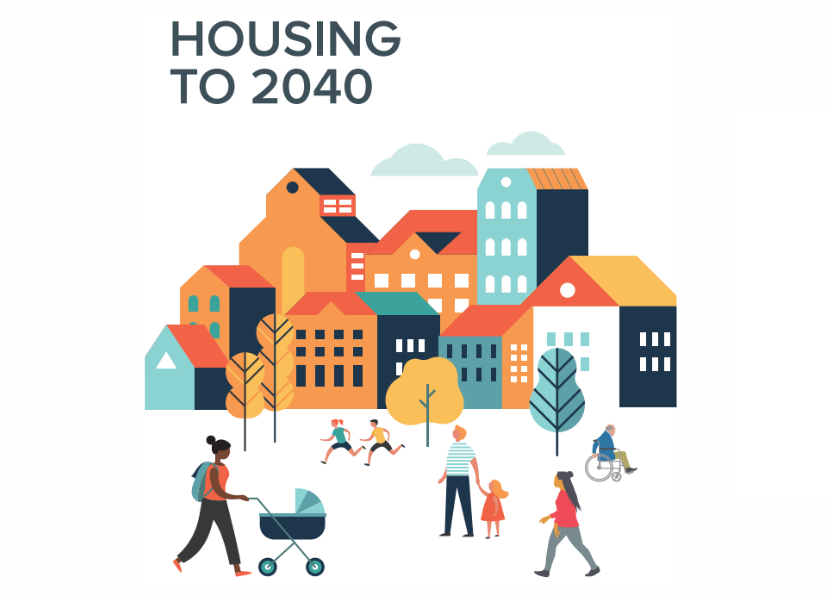
Scotland’s Housing to 2040 strategy sets out one of the most ambitious long-term housing visions in the UK. But at CIH’s Scottish Housing Festival 2026 held in Glasgow last week, the conversation moved beyond ambition and into delivery.
Across the sector, a more pressing question is emerging. Not what needs to be achieved, but whether current financial, operational, and regulatory capacity is sufficient to achieve it at scale.
Housing as Infrastructure, Not Service Delivery
The opening session set the direction. Professor Duncan McLennan of the University of Glasgow and Sabir Zazai, CEO of the Scottish Refugee Council, challenged the sector to rethink the role of housing itself.
Housing, they argued, must be understood as core infrastructure. It shapes health outcomes, enables social integration, and underpins stable communities. This framing aligns directly with the Scottish Government’s Housing to 2040 strategy, which positions housing as central to Scotland’s long-term social and economic wellbeing.
The implication is significant. If housing is infrastructure, then tenancy sustainment, property condition, and affordability are not operational concerns to be balanced. They are foundational requirements that determine wider societal outcomes.
A Housing Emergency Defined by Delivery, Not Intent
That strategic ambition is now colliding with immediate pressures. Will Tyler-Greig of More Homes Scotland highlighted the scale of the current crisis, pointing to more than 10,000 children living in temporary accommodation and 13 local authorities declaring housing emergencies.
At the same time, approvals for new homes are increasing. The issue is not a lack of pipeline. It is the ability to convert approvals into completed homes at pace.
This reflects a broader trend identified by the Scottish Housing Regulator, which has reported a growing proportion of social homes being allocated to households experiencing homelessness. Demand is intensifying, and the system is increasingly operating in reactive mode.
As Tyler-Greig noted, relationships, delivery capacity, and operational execution are now as critical as funding itself.

Financial Strength Masking Tighter Constraints
From a financial perspective, the picture appears relatively stable. Jon Turner, CEO of Link Housing, alongside Professor Ken Gibb, outlined a sector that remains attractive to lenders, with strong balance sheets and continued access to borrowing.
However, Turner’s description of the sector as “asset rich but cash constrained” resonated across discussions. While capital values remain robust, liquidity is tightening. Borrowing is becoming more complex, and the cost of finance is rising.
This assessment is echoed in analysis from Scottish Housing News, which highlights that although RSL finances remain stable overall, projections point to increasing financial pressure in the years ahead.
Professor Gibb’s intervention went further, questioning some of the sector’s long-standing assumptions. Why, he asked, are organisations continuing to repay debt within long-term business plans when investment demands are increasing? And how sustainable are current development models when costs continue to rise faster than income?
These are structural questions that go beyond short-term financial management. They speak directly to the sector’s capacity to deliver at scale.
The Growing Pressure on the HRA
That capacity challenge becomes more acute when viewed through the lens of the Housing Revenue Account. Sharon Egan, Head of Housing at South Lanarkshire Council, described an environment where competing pressures are intensifying.
Development programmes rely heavily on HRA funding, alongside government grant. At the same time, net zero requirements are increasing costs, while wider service pressures continue to draw on the same finite resources.
The result is a narrowing margin for manoeuvre. Every unplanned cost, whether from disrepair claims, compliance failures, or rising arrears, reduces the headroom available for new development.
In this context, the trade-off between building new homes and maintaining existing stock is no longer theoretical. It is a daily operational reality.

Income Risk and the Fragility of Financial Planning
What sits beneath all of these pressures is a factor that often receives less attention: income stability.
Rental income underpins long-term financial planning, yet it is becoming increasingly volatile. The Scottish Housing Regulator’s annual reporting highlights the ongoing financial challenges faced by tenants, which in turn affect landlords’ income streams.
At CIH Scotland, this was reflected in practical challenges around arrears, voids, and access. Longer re-let times, increasing demand for homelessness allocations, and the operational complexity of managing “no access” cases all introduce variability into income collection.
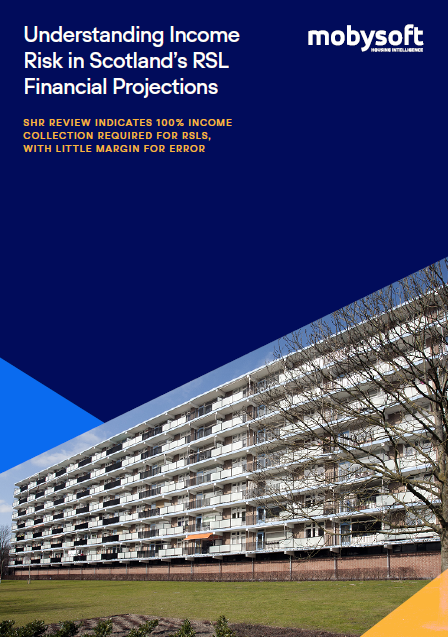
Mobysoft’s Understanding Income Risk in Scotland’s RSL Financial Projections briefing explores this in detail, showing how even small shifts in income performance can have significant implications for long-term capacity.
Income is often assumed to be stable in financial projections. Increasingly, that assumption no longer holds.
From Reactive Repair to Proactive Governance
The regulatory environment is also shifting. Lessons from England, particularly in relation to damp and mould, were referenced repeatedly. Scotland may be ahead in some respects, but there is a clear warning against complacency.
Ian Brennan of IMB Solutions emphasised that “the audit trail of timetable is critical”. In other words, it is no longer enough to act. Landlords must be able to evidence how and when they acted.
This reflects a broader move towards proactive governance, where data must be robust, auditable, and defensible. Guidance and commentary from organisations such as the Scottish Federation of Housing Associations increasingly point to the importance of data quality and risk visibility in meeting regulatory expectations. In this environment, data becomes more than an operational tool and instead becomes a form of protection.
Download the Briefing Paper: Understanding Income Risk in Scotland’s RSL Financial Projections
As regulatory expectations increase and financial margins tighten, protecting income streams is becoming critical for Scotland’s housing providers.
Mobysoft’s recent briefing paper Understanding Income Risk in Scotland’s RSL Financial Projections explores:
- The financial exposure facing landlords if income collection performance declines
- The implications for long-term housing business plans
- Why proactive income risk management is becoming essential for sector resilience
Download the briefing today to understand how income risk could affect the financial sustainability of Scotland’s social housing sector.

Mobysoft AI-powered RentSense®, RepairSense®, and RiskSense® help landlords improve their income-collection processes and the productivity, quality, and sustainability of their repairs service for the benefit of all involved.